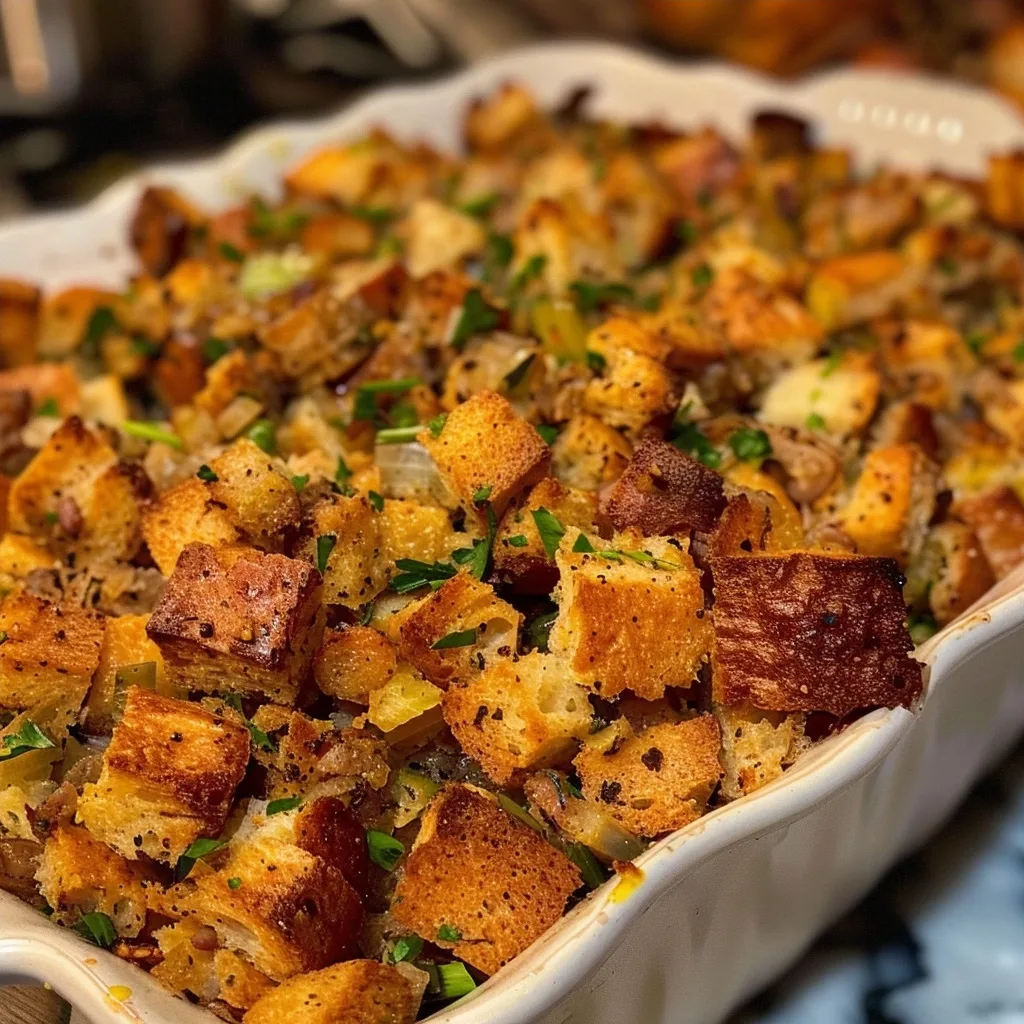
Thanksgiving stuffing serves as the quintessential savory centerpiece for every festive holiday dinner table. This classic side dish relies on high-quality dried bread cubes, aromatic vegetables, and fresh herbs to deliver a complex, comforting profile. Achieving the perfect texture requires a precise balance of moisture and crisp edges that elevates any meal. Follow this reliable method to create a memorable dish that guests will request year after year.
Recipe Overview
| Metric | Details |
|---|---|
| Prep Time | 20 minutes |
| Cook Time | 45 minutes |
| Total Time | 1 hour 5 minutes |
| Servings | 8-10 servings |
| Difficulty | Easy |
| Cuisine | American |
Why This Recipe Works
This recipe succeeds because it focuses on the interplay between texture and seasoning. By drying the bread in advance, you ensure the cubes absorb the flavorful broth without becoming mushy during the bake. The combination of celery and onions provides a foundational sweetness that complements the earthiness of sage and thyme.
My experience in the kitchen reveals that the secret lies in the fat-to-liquid ratio. Using quality butter creates a rich mouthfeel while keeping the top layers golden and crunchy. This method guarantees a consistent result that pleases both traditionalists and modern diners alike at every holiday gathering.
Ingredients
| Ingredient | Quantity | Notes |
|---|---|---|
| Dried Bread Cubes | 12 cups | Use sourdough or a mix of white and whole wheat |
| Unsalted Butter | 1 cup | Substitute with dairy-free margarine if needed |
| Yellow Onions | 2 cups | Diced finely for even distribution |
| Celery Stalks | 2 cups | Sliced thin for texture |
| Fresh Sage | 2 tbsp | Finely chopped |
| Fresh Thyme | 1 tbsp | Stripped from stems |
| Vegetable Broth | 3 cups | Low sodium preferred to control salt levels |
| Kosher Salt | 1 tsp | Adjust based on broth sodium content |
| Black Pepper | 0.5 tsp | Freshly cracked |
Step-by-Step Instructions
Preparation
- Preheat your oven to 375 degrees Fahrenheit for even heating.
- Grease a large 9×13 baking dish with butter to prevent sticking.
- Spread bread cubes on a baking sheet and toast for ten minutes if they feel soft.
Sautéing
- Melt the butter in a large skillet over medium heat.
- Add the diced onions and celery to the pan.
- Cook the vegetables until translucent and tender, approximately eight minutes.
- Stir in the fresh sage, thyme, salt, and pepper for one minute until fragrant.
Baking
- Combine the toasted bread cubes and sautéed vegetable mixture in a large mixing bowl.
- Pour the vegetable broth slowly over the bread mixture while tossing gently.
- Transfer the mixture to the prepared baking dish.
- Cover with foil and bake for twenty minutes to steam the bread.
- Remove the foil and bake for an additional twenty-five minutes until the top turns crispy.
Chef Tips for Perfect Results
- Use day-old bread or dry it in the oven to ensure it absorbs moisture correctly without turning into paste.
- Whisk the herbs thoroughly into the melted butter to distribute their oils evenly throughout the bread.
- Cover the dish with foil for the first half of baking to retain enough steam for soft interiors.
- Remove the foil during the final stages to achieve that desirable golden-brown crust.
- Let the dish rest for ten minutes after removing it from the oven to allow juices to redistribute.
Common Mistakes to Avoid
- Over-soaking the bread: Using too much broth makes the dish dense; add liquid gradually until just moist.
- Using soft bread: Fresh bread lacks the structure to hold up; always use dried cubes for better texture.
- Ignoring salt content: Broths vary in salinity; taste your mixture before adding the final measured salt.
- Crowding the baking dish: Packing the mixture too tightly prevents heat circulation and results in uneven cooking.
Variations and Substitutions
| Ingredient | Substitution | Impact |
|---|---|---|
| Sourdough | Cornbread | Adds a subtle sweetness and denser crumb |
| Vegetable Broth | Mushroom stock | Deepens the savory umami notes significantly |
| Butter | Olive oil | Creates a lighter profile with a subtle fruity note |
Serving Suggestions and Pairings
Serve this stuffing alongside roasted turkey or a savory vegetarian wellington. It pairs exceptionally well with cranberry sauce and mashed sweet potatoes. For a complete menu, include roasted green beans with toasted almonds. These pairings provide a balance of acidity, sweetness, and crunch that makes the holiday meal feel complete.
Storage and Reheating
| Method | Duration | Instructions |
|---|---|---|
| Refrigeration | 3-4 days | Store in an airtight container |
| Oven Reheating | 15 minutes | Cover with foil at 350 degrees Fahrenheit |
Nutritional Information
Approximate values per serving.
| Nutrient | Amount |
|---|---|
| Calories | 240 |
| Protein | 6g |
| Fat | 10g |
| Carbohydrates | 32g |
| Fiber | 3g |
Frequently Asked Questions
Can I use gluten-free bread for this stuffing?
You can successfully use gluten-free bread if you ensure the loaf is dried thoroughly before mixing. Gluten-free varieties often have a different moisture absorption rate, so keep a little extra broth nearby just in case.
How do I know when the stuffing is fully cooked?
The stuffing is done when the internal temperature reaches 165 degrees Fahrenheit. You will also notice the edges are firm and crispy, while the center remains moist and held together.
What is the best way to fix dry stuffing?
Add small amounts of warm vegetable broth to the dish and cover it with foil. Return it to the oven for five minutes until the moisture redistributes through the cubes.
Can I assemble this dish ahead of time?
You can assemble the mixture up to 24 hours in advance and store it in the refrigerator. Keep the broth separate and add it immediately before baking to prevent the bread from becoming soggy.
How can I make the stuffing more flavorful without meat?
Increase the depth of flavor by sautéing mushrooms with the onions or using a high-quality vegetable stock. Adding a small amount of smoked paprika or dried cranberries can also provide extra complexity.
Conclusion
Creating homemade Thanksgiving stuffing allows you to customize the textures and flavors to perfectly match your holiday traditions. By using quality bread and fresh aromatics, you elevate a simple side into a culinary highlight. Remember that patience with the bread-drying process guarantees the structure required for a classic finish. Serve this dish warm alongside your favorite seasonal sides for a complete experience. Your guests will appreciate the effort put into this comforting, savory masterpiece that defines the spirit of the harvest table.