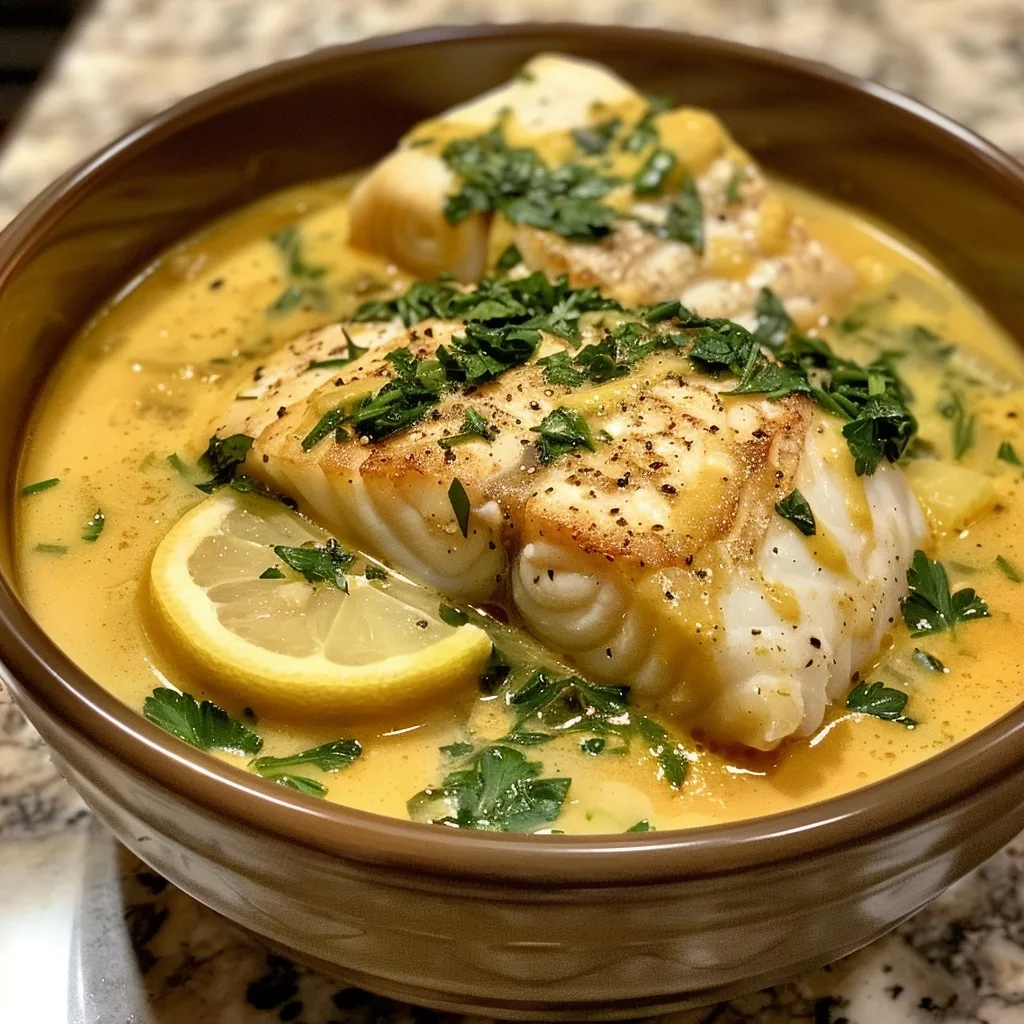
Healthy Lemon Cod Soup for Nutrient-Dense Comfort serves as a restorative meal packed with lean protein and zesty citrus notes. This cod-based broth provides an excellent balance of essential vitamins and minerals without relying on heavy thickeners or fats. Cooks seeking a wholesome dinner option will appreciate how quickly this dish comes together using simple, fresh pantry staples.
Recipe Overview
| Attribute | Detail |
|---|---|
| Prep Time | 15 minutes |
| Cook Time | 20 minutes |
| Total Time | 35 minutes |
| Servings | 4 servings |
| Difficulty | Easy |
| Cuisine | Mediterranean-inspired |
Why This Recipe Works
This recipe works because the natural sweetness of flaky cod pairs seamlessly with the bright, acidic profile of fresh lemon juice. Relying on a light vegetable broth allows the delicate flavors of the seafood to remain the focal point of every bite, ensuring a satisfying meal that feels incredibly light and refreshing.
I personally rely on this soup whenever I need a boost of clean energy during busy work weeks. It requires minimal cleanup and delivers high-quality protein, which makes it a superior choice compared to traditional hearty meat stews. The addition of aromatic herbs ensures you get depth of flavor in every spoonful.
Ingredients
| Ingredient | Quantity | Notes |
|---|---|---|
| Cod Fillets | 1.5 lbs | Fresh or thawed frozen works well |
| Vegetable Broth | 6 cups | Use low-sodium base for health control |
| Lemon juice | 3 tbsp | Freshly squeezed is mandatory for flavor |
| Carrots | 2 large | Diced into uniform rounds |
| Fresh Dill | 1/4 cup | Finely chopped for aromatics |
| Garlic | 3 cloves | Minced finely |
| Olive Oil | 1 tbsp | Use extra virgin for finishing |
Step-by-Step Instructions
Preparation Phase
- Chop the carrots and mince the garlic into uniform sizes to ensure they cook evenly.
- Cut the cod fillets into two-inch chunks to prevent them from breaking apart during boiling.
Cooking Phase
- Heat the olive oil in a large pot over medium heat until it shimmers.
- Sauté the garlic for one minute until it becomes fragrant but not browned.
- Pour the vegetable broth into the pot and add the carrots.
- Simmer the liquid for ten minutes until the carrots reach a tender consistency.
- Add the cod chunks carefully into the broth to maintain their structural integrity.
- Cook for five additional minutes until the fish turns opaque and flakes easily.
- Turn off the heat and stir in the fresh lemon juice and chopped dill.
Chef Tips for Perfect Results
- Use high-quality wild-caught cod to ensure the firmest texture and best nutritional profile.
- Avoid overcooking the fish, as cod turns rubbery if kept in boiling liquid for too long.
- Add the lemon juice at the very end to preserve the volatile citrus oils and bright color.
- Cut vegetables into consistent shapes so they provide a uniform bite alongside the tender fish.
Common Mistakes to Avoid
Using old lemon juice lead to a dull, bitter flavor profile that ruins the freshness of the broth. Always squeeze fresh lemons immediately before serving to maintain the vibrancy of the soup. Another mistake involves overcrowding the pot while adding the fish, which prevents consistent heat distribution. Place your fish gently and ensure it remains in a single layer to avoid breaking the delicate flakes. If the soup lacks depth, increase the sauté time for the garlic to draw out more natural sweetness before adding the liquid.
Variations and Substitutions
| Ingredient | Substitution | Impact on Flavor |
|---|---|---|
| Cod | Haddock | Provides a firmer texture and slightly milder taste |
| Vegetable Broth | Fish Stock | Enhances the oceanic umami quality of the dish |
| Dill | Parsley | Adds a more earthy and peppery background note |
Serving Suggestions and Pairings
Serve this soup alongside toasted whole-grain crusty bread or a crisp green salad tossed with a light vinaigrette. It makes an ideal mid-week dinner particularly during transitional seasons when the body craves warming yet light nourishment. For a more filling meal, you can stir in cooked quinoa or baby spinach just before turning off the heat.
Storage and Reheating
| Method | Duration | Instructions |
|---|---|---|
| Refrigerator | 24 hours | Store in a sealed glass container to prevent fish odors |
| Reheating | Slow-Heat | Warm gently on the stovetop; avoid high heat boiling |
Nutritional Information
| Nutrient | Amount per Serving |
|---|---|
| Calories | 220 kcal |
| Protein | 35g |
| Fat | 4g |
| Carbohydrates | 12g |
Approximate values.
Frequently Asked Questions
Can I substitute cod with other white fish?
You can successfully use haddock, pollock, or tilapia in this soup without changing the cooking times. These white fish varieties share similar lean qualities and mild flavors that complement the lemon broth base.
How do I know when the cod is fully cooked?
The cod is perfectly cooked when it becomes opaque and separates easily into large, tender flakes with a fork. Check the thickest part of the fillet to ensure it has lost any translucent appearance.
Why is my broth cloudy after adding the fish?
Your broth may appear cloudy if you stir the pot too aggressively while the fish is cooking. Handle the contents gently to keep the fish chunks intact and maintain a clear, restaurant-quality appearance.
Can I prepare this recipe one day in advance?
You can prepare the vegetable base in advance, but it is best to add the fish fresh before serving. Reheating delicate seafood often leads to overcooked, dry fish that falls apart entirely in the broth.
What is the best way to serve this for guests?
Serve this soup in pre-warmed bowls with a fresh sprig of decorative dill placed on top for an elegant presentation. Providing a wedge of lemon on the side allows guests to adjust the acidity to their personal preference.
This healthy lemon cod soup highlights the power of clean ingredients to create a memorable, nourishing experience. By keeping the cooking process straightforward, you ensure the integrity of the seafood remains intact. Enjoy the refreshing combination of citrus and marine flavors as a regular staple in your wellness routine. For more information on sourcing sustainable seafood, consult the NOAA Fisheries guidelines or visit Seafood Watch for updated local recommendations.